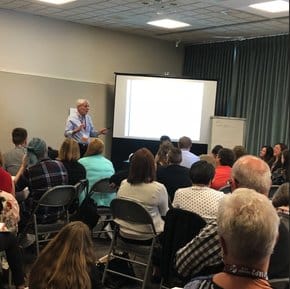
As an organization, IAP2 focuses on building better approaches to the process variously called “public engagement,” “community engagement,” “civic engagement,” or “public participation,” depending on the field of the practitioner. In our work, we generally call it community engagement. This is the process by which governments, institutions, and other organizations that make decisions affecting the public ask for the public’s input into those decisions.
Building Safe and Inclusive Communities was the theme of the 2018 Public Health Association of BC (PHABC) Summer School, hosted on July 5th and 6th at five university sites and five other remote sites across BC and Saskatchewan. Presenters shared stories, experiences,...
Did you know that 7 out of the 10 Canadian municipalities with the largest portion of seniors are located in B.C.? As a result, more communities are exploring what it means to become age-friendly, supporting all stages, from childhood through to later years....
The province recently introduced legislation to make housing needs reports (HNRs) mandatory for local governments. These reports, intended to better support planning for housing affordability, will be required every five years. The good news is that funding comes attached to this legislation—$5 million over 3 years. This funding presents a fantastic opportunity to communities to engage in an assessment that looks at more than just the numbers, instead prioritizing equity, health, diversity and engagement. Read on to learn more about what a traditional housing needs assessment entails, and how a health-focused assessment can make for a stronger, and ultimately more useful analysis.
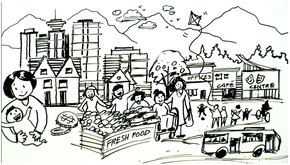
Characteristics of the built environment in which community members live, work, play, and learn have an impact on mental health. Community design decisions made today can have lasting impacts on your community, creating elements that will influence mental health for years to come. In this article, we’ve presented four potential methods by which local governments can promote mental and social wellness when designing the built environment of their community.
All policies—even those that don’t directly deal with health—have the ability to enhance or hinder your community’s health and well-being. As a local government, it’s easy to think of health as being outside your mandate, strictly speaking. However, policies made by local governments in the areas of transportation, land use and community planning, housing, and more affect the social determinants of health, a spectrum of factors such as physical environments, social support networks, and healthy child development. This means that, with each policy decision a local government makes, they either enhance or deteriorate the health of their citizens. It’s a huge responsibility, and for local governments, its fundamental importance in the lives of community members means it’s one that simply can’t be ignored.