Youth leadership evolves leaps and bounds in the City of Victoria. In the spring of 2004, then-youth coordinator Chelsea Peddle had an idea. She saw a gap between city politics and young peoples’ needs in the City of Victoria, and wanted to close it. She proposed the idea of a Youth Council, where youth could comment and provide feedback to the city on the civic issues that mattered to them. The City responded to her proposal by granting support in principle to begin developing a coalition of youth and stakeholders. Through this process, The City of Victoria Youth Council (CVYC), a youth-driven, grassroots program that offered opportunities for civic engagement to youth who live, work, hang out or go to school in the City of Victoria, was born.
Evaluation matters. Our team at BC Healthy Communities integrates evaluation into all aspects of our work– from start to finish. Evaluation is the process of critically examining what we do and how we do it, so we can understand the outcomes of our activities, our program strengths and areas for improvement. We use our findings to inform tools, resources, planning and program decisions, and to increase accountability between our funders and community partners. It’s not always easy, but the results are invaluable.
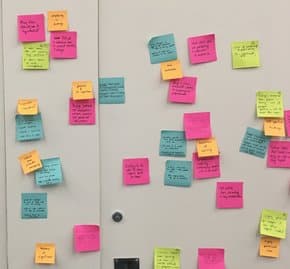
Two members of our evaluation team visited Vancouver in 2018 to attend the Canadian Evaluation Society BC Chapter’s 2018 Provincial Conference. With the theme What’s in Your Evaluation Toolbox?, the conference offered attendees a variety of workshops focusing on building evaluative capacity and adding new tools to our evaluation toolboxes. Using some of the top tweets from conference attendees, we’ve put together ten key takeaways from the conference.
Decisions made about how we respond to climate change will impact community health and prosperity. How do we work together to implement practices that both prepare our communities and increase health and well-being? Health agencies, local and provincial governments, civil society and individuals are increasingly mindful of the effects of climate change on the health and well-being of their communities. Preparation before a crisis and the response during and after is a cross-sectoral challenge, drawing resources and capacity from communities and all levels of government. More than ever, communities recognize that effective resiliency planning requires collaboration between different partners, leveraging the strengths of different sectors towards common goals. Decisions made about how we respond to climate change will impact community health and prosperity. How do we work together to implement practices that both prepare our communities and increase health and well-being?
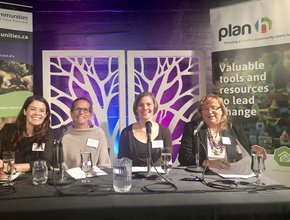
We were thrilled to have nearly 200 folks join us either in-person or via livestream from across BC for Physical Activity for All: Tools and Approaches for Equity in Active Communities. Interested in the top takeaways from the event? We’ve put together a list of the night’s top #PAforAll highlights, as shared by folks on Twitter.
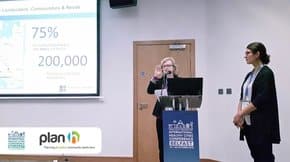
In the last half-century, the planner’s role and responsibilities have changed remarkably. Traditionally, planners worked to build and maintain the infrastructure of the public realm. In contrast, the issues that planners now grapple with are complex, interconnected and interdisciplinary—issues like population growth and shifts, social connectedness, housing and homelessness, equitable use of government resources, reconciliation, and accessibility. When we at BC Healthy Communities attended the Canadian Institute of Planners (CIP) conference earlier this year, this was brought into clear relief: the majority of the lectures, case studies and stories shared by planners at the conference described projects that interacted with gender, race, reconciliation, equity, and power. It’s an exciting time to be a planner, but at the same time, the responsibility to integrate all perspectives and dimensions of power and fairness into planning has never been greater.