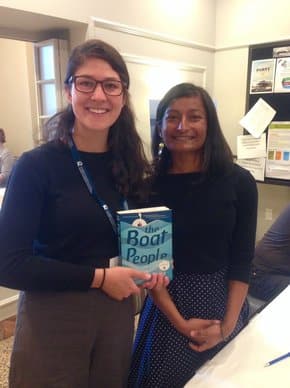
A few weeks ago, our Communications Manager Johanna and I had the good fortune of attending a public participation (P2) training put on by the International Association for Public Participation (IAP2). We met dozens of P2 and community engagement professionals from around Canada advocating for public input in a variety of sectors and projects. Community engagement is a pillar of Healthy Communities work, reinforcing a ‘whole of community’ approach involving individuals, communities, governments, and other entities in policy and decision making.
Most days at BC Healthy Communities I feel two things: fortunate and conflicted. I feel fortunate because my workplace is welcoming and safe and my coworkers are bright, caring and compassionate. I also feel fortunate because I get to work on projects that attempt to address complex social matters, which I find interesting and important. But I’m conflicted because there are days where I feel as though the work I do, engaging and researching with communities, might be more effectively done by someone who is actually experiencing the challenges and successes we as an organization try to understand and support.
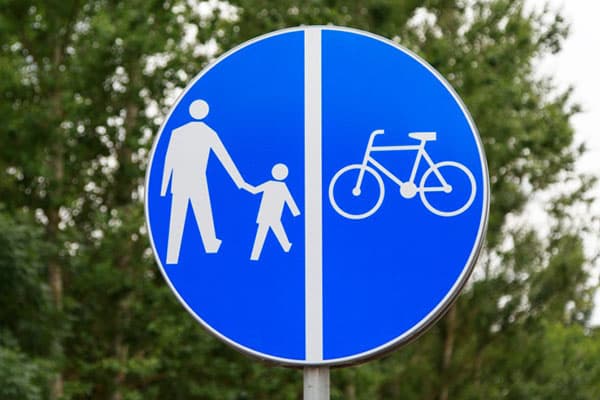
We were thrilled to visit New Westminster to attend B.C.’s first Active Transportation Summit in June 2019. The two-day summit featured keynote speakers, panel discussions, interactive workshops and presentations focused on expanding our ways of thinking about active transportation and learning from initiatives across B.C. Our summer practicum student, Alexis Erlichman, describes some of her most important takeaways when it comes to creating active transportation for all.
How can be humbler and more open-minded? In evaluation we are taught to measure success and outcomes, tracking indicators over time using ‘evidence-based, Western’ methodologies. The focus in evaluation is on the external. Yet, I’m realizing more than ever, that we must look inwards and undergo a process of self-reflection in order to understand personal and systemic biases that we each have. We need to humbly acknowledge that we are learners, especially when it comes to understanding another’s experience. We should not just do this as evaluators, but as members of this society and as human beings.
BC Healthy Communities’ planning team, together with Urban Matters, have netted a nomination for the Planning Institute of BC’s New Directions Award for their work on the Strathcona Regional District Housing Needs Assessment. The project, which wrapped last year, was deemed as innovative for its approaches to gathering qualitative data. These included community engagement techniques designed to reach members of the community from across the housing spectrum, particularly from those regularly accessing housing services, those experiencing homelessness, and those with mental health challenges and diverse abilities. This allowed for a report that highlighted not only necessary information on housing stock and tenure, but also systemic issues impacting accessibility and affordability across the region, including systemic racism, lack of food access and challenging transportation scenarios.
Youth leadership evolves leaps and bounds in the City of Victoria. In the spring of 2004, then-youth coordinator Chelsea Peddle had an idea. She saw a gap between city politics and young peoples’ needs in the City of Victoria, and wanted to close it. She proposed the idea of a Youth Council, where youth could comment and provide feedback to the city on the civic issues that mattered to them. The City responded to her proposal by granting support in principle to begin developing a coalition of youth and stakeholders. Through this process, The City of Victoria Youth Council (CVYC), a youth-driven, grassroots program that offered opportunities for civic engagement to youth who live, work, hang out or go to school in the City of Victoria, was born.